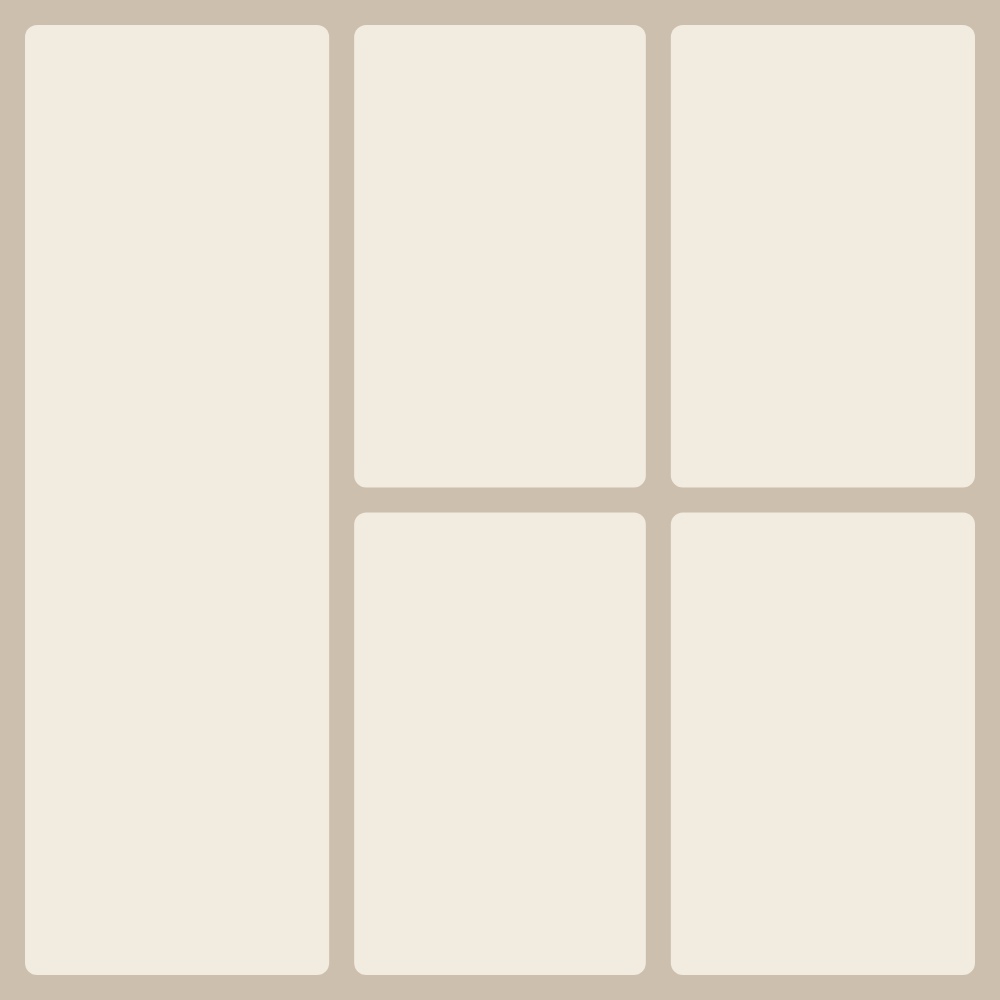
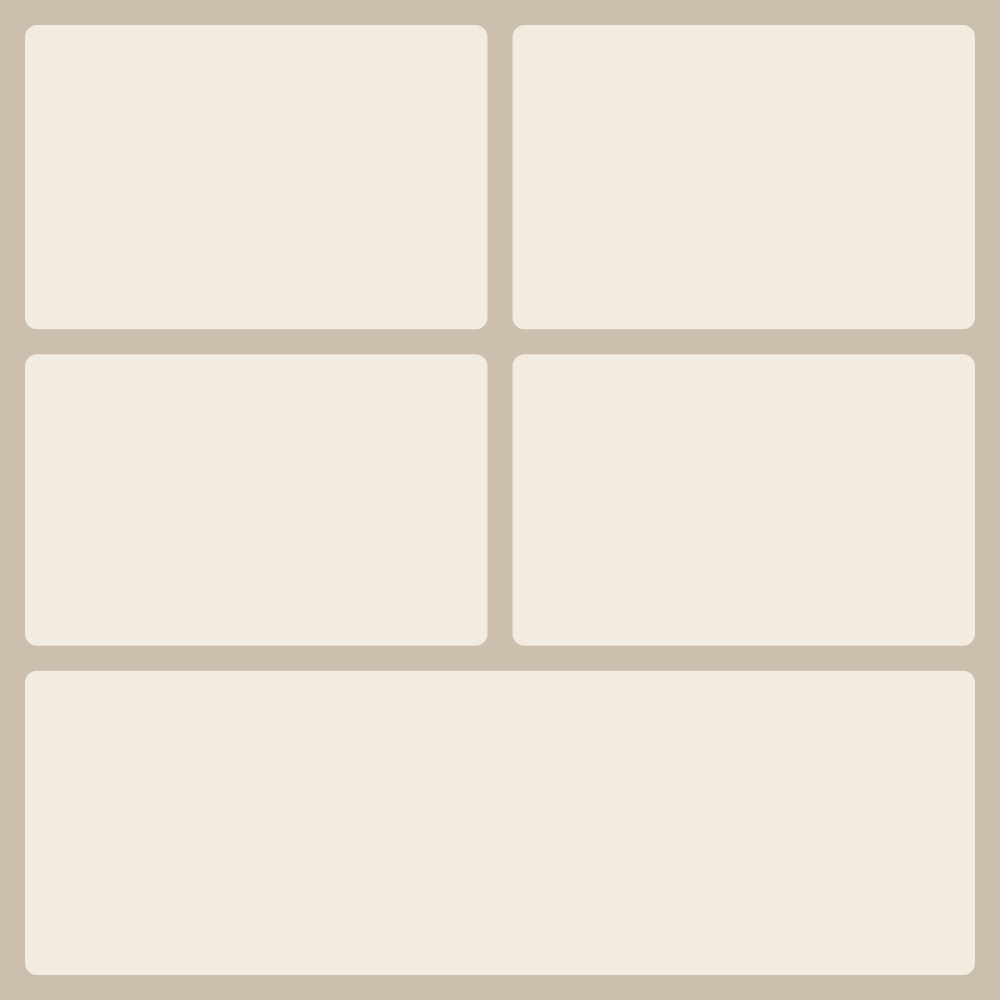
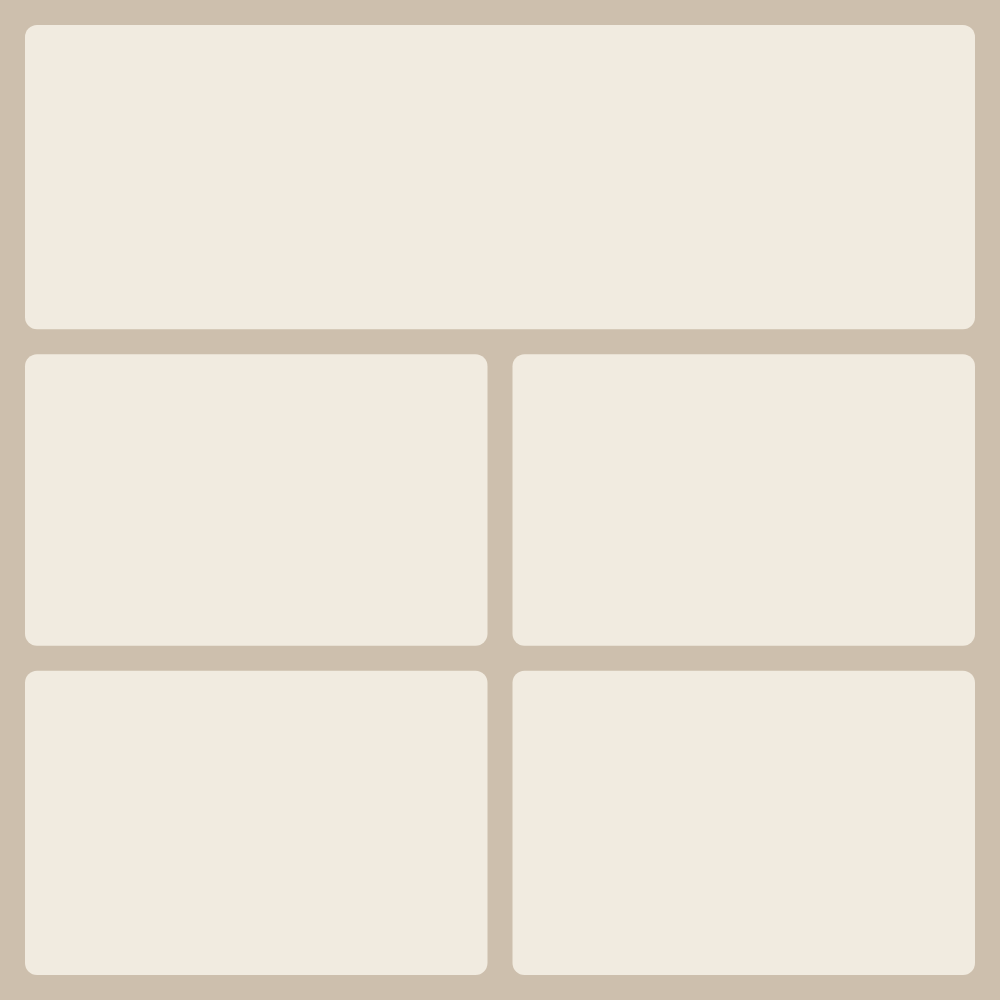
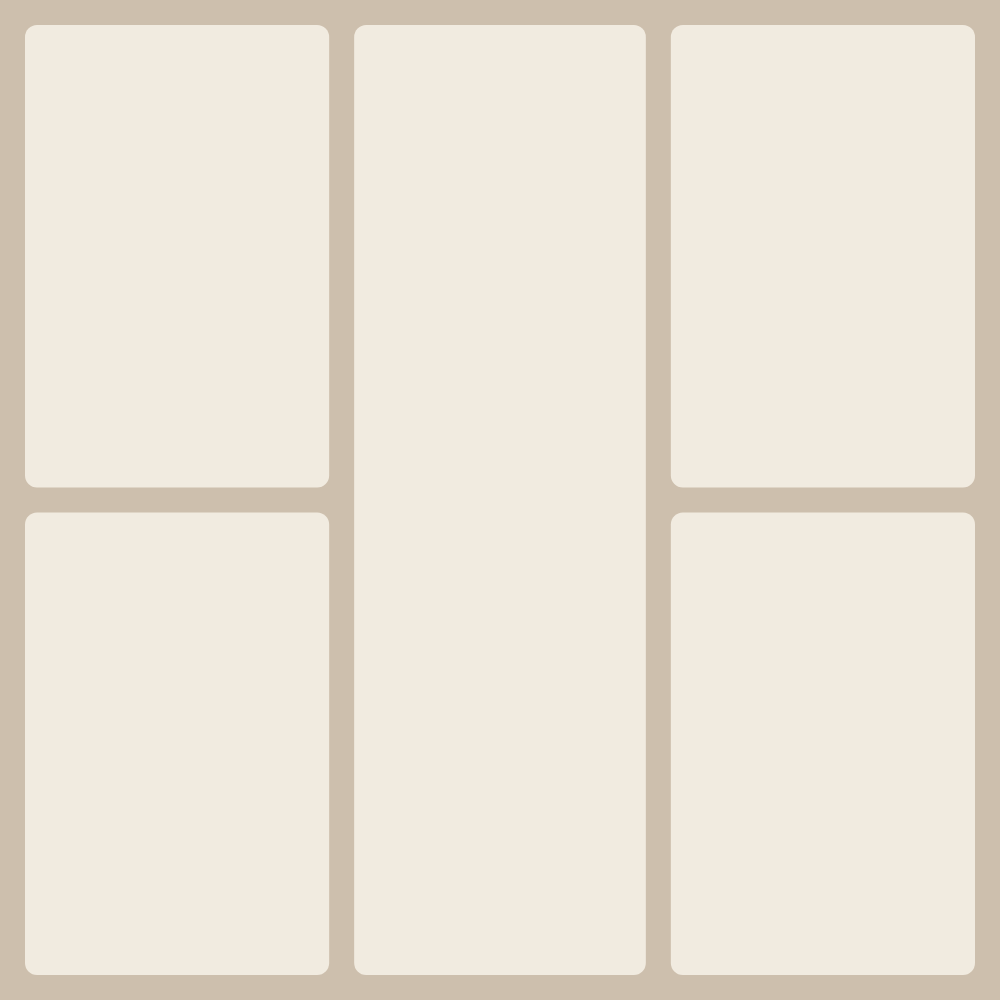
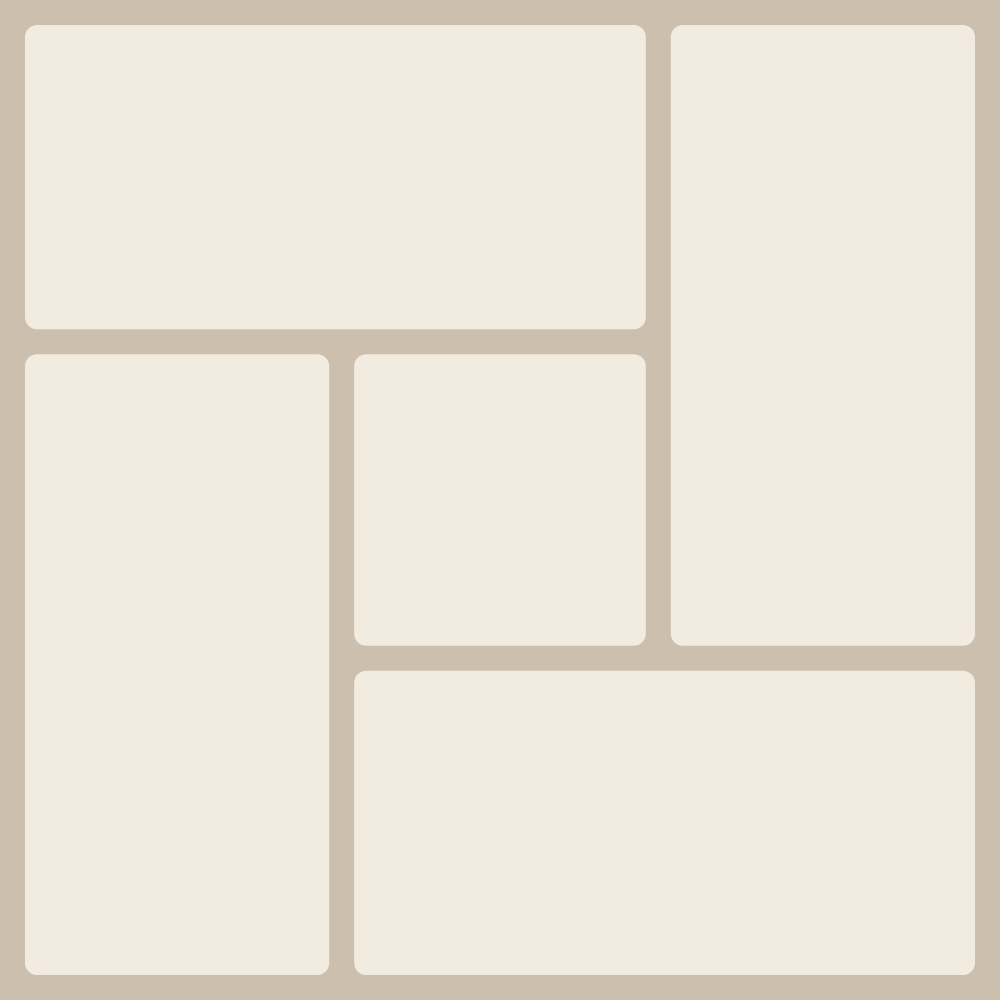
Five is odd, and a square sheet can't hold five equal cells in an even grid. So most of the 22 layouts follow a four-plus-one formula and differ only in where that one goes. In “5: Left hero + 2×2 right” it takes a tall left third; in “5: 2×2 + wide bottom” and “5: Wide top + 2×2” it stretches across the full width, a panorama above or below the block of four.
The most recognisable five-photo pattern is the medallion: a shape in the middle and four frames in the corners. Nearly all the shaped layouts work this way — a regular or large circle, a circle with slanted corners, a diamond, a heart, a square cross, a circle with petals. The centre draws the eye, so that's where the birthday girl, the newlyweds or the main portrait go, with guests, the venue and party details in the corners.
Corner cells in a medallion are irregular, because the central shape cuts away their inner edge. Keep faces and text towards the outer corners of the sheet and let background fall near the middle. The rectangular layouts have a limit of their own: a panorama band is about three times wider than it is tall, so a portrait placed there shrinks to a thin slice of face.